Understanding Vessel Performance Through Operational Data
Every voyage generates operational data. When fuel, speed, weather, route and engine performance are read together, fleets can see what normal looks like — and decide what to do next.
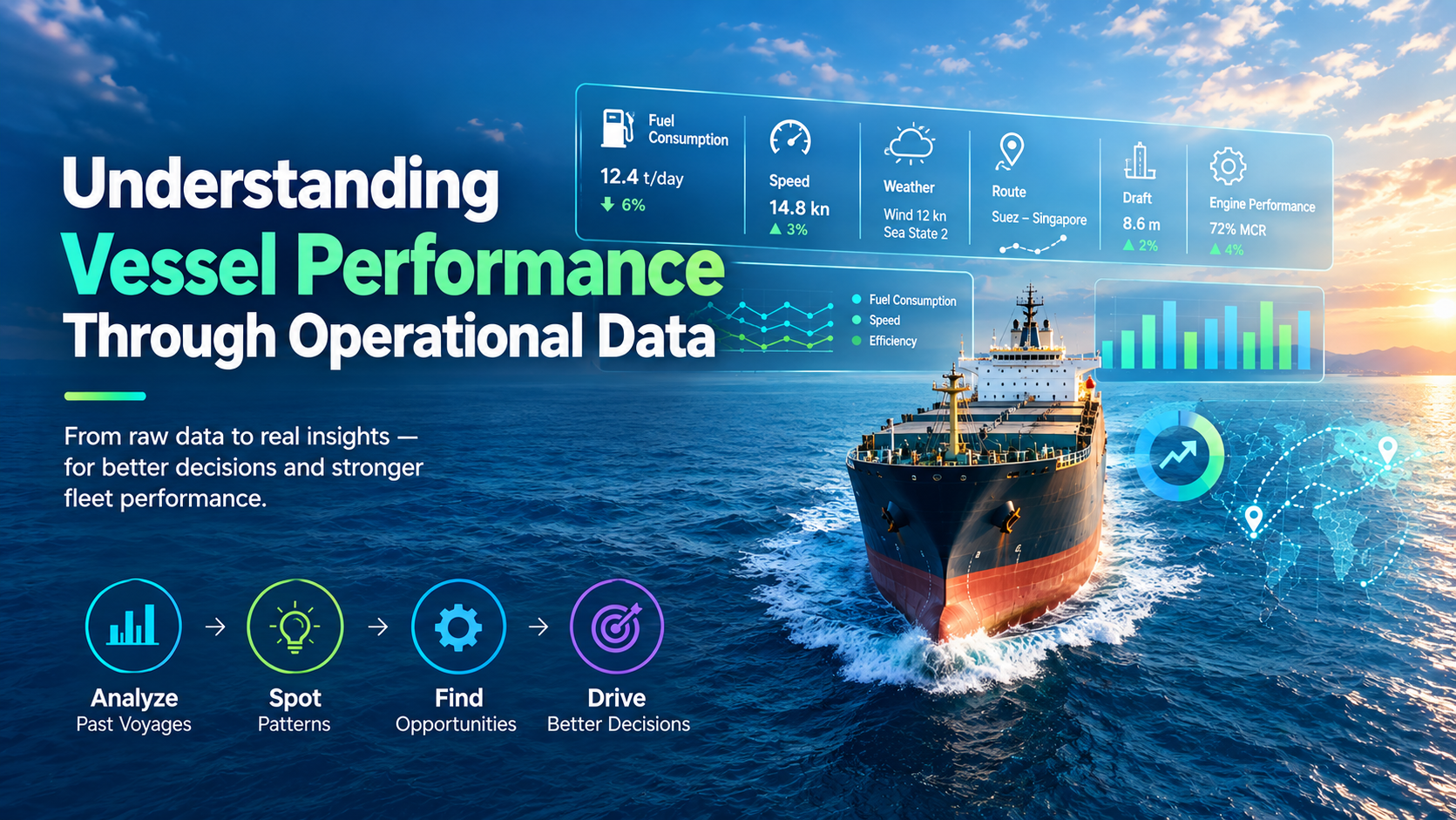
Every voyage generates valuable operational information. Fuel consumption, speed, weather conditions, route, draft, engine performance and other voyage parameters all contribute to understanding how a vessel performs.
Individually, these data points provide useful information. When analyzed together over time, they can reveal performance patterns, changes in efficiency and opportunities for improvement.
This is why vessel performance analysis is becoming an increasingly important part of modern fleet management.
What Does Vessel Performance Really Mean?
Vessel performance is about more than measuring fuel consumption or speed. Weather, sea conditions, draft, loading condition, route, engine operating conditions and operational decisions can all influence performance. This means performance figures are most useful when viewed in context.
Instead of asking only “How much fuel did the vessel consume?”, fleet teams can ask “Why did the vessel consume this amount, and how does it compare with its normal performance?”
This shift from measurement to understanding creates greater operational insight.
Understanding a Vessel's Normal Pattern
Every vessel develops its own operational characteristics. Historical voyage data can help establish what normal performance looks like under different operating conditions. Once this baseline is understood, changes become easier to identify.
Vessel performance monitoring can help teams identify:
- Changes in fuel consumption
- Variations at similar speeds
- Differences between comparable voyages
- Changes in voyage efficiency
- Performance patterns linked to specific conditions
Not every variation indicates a problem. The objective is to understand whether a change is expected or requires further attention.
From Voyage Data to Voyage Learning
A completed voyage should provide more than a final report. It can provide knowledge for future voyages. By comparing previous voyages, teams can understand how a vessel responded to different weather conditions, routes, speeds and operational decisions.
This creates a continuous learning cycle: voyage, data, analysis, insight, then a better decision. Over time, this helps build a stronger operational knowledge base for both individual vessels and the wider fleet.
Looking Across the Fleet
Fleet performance analysis allows teams to compare vessels operating under similar conditions and identify meaningful differences. This can help answer questions such as:
- Where are performance patterns changing?
- Which operational practices appear to support better results?
- What can be learned from comparable vessels?
- How can operational knowledge be shared across the fleet?
The purpose of benchmarking is not simply to rank vessels, but to support knowledge sharing and continuous improvement.
Turning Data Into Action
The value of operational data ultimately comes from how it supports decisions. A useful approach should help teams move through three stages:
- See: What is happening?
- Understand: Why is it happening?
- Act: What should we consider doing next?
This turns operational data into a practical part of everyday decision-making rather than information reviewed only after a voyage.
The Future of Vessel Performance
The future of vessel performance analytics will not simply be about collecting more data. It will be about connecting information, understanding patterns and using previous operational experience to support better decisions.
Every voyage creates an opportunity to learn. When that learning is captured and applied, the next voyage can begin with more knowledge than the last.
Better vessel performance starts with better understanding — and operational data provides the foundation for that understanding.