
How AI Is Changing the Way Fleet Managers Make Decisions
Fleet managers have more data than ever. AI turns vessel reports, fuel, safety and voyage history into priorities - so teams decide with confidence, not by searching through systems.
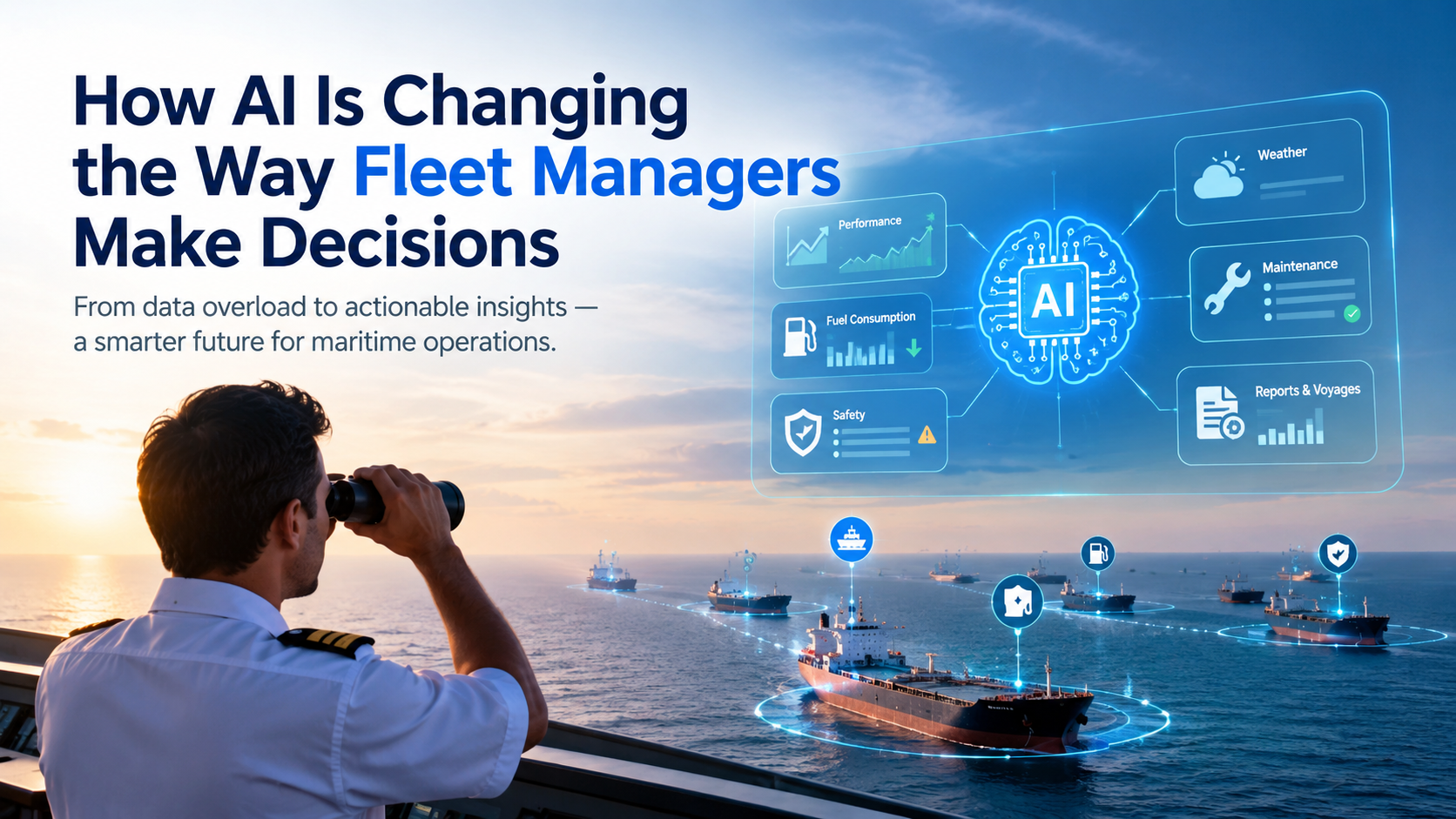
The role of a fleet manager has always been centered around making informed decisions. Which vessel needs attention? Where can performance improve? Are there emerging safety concerns? What should the team prioritize?
Today, fleet managers have access to more information than ever before. Vessel reports, voyage data, fuel consumption, weather conditions, inspections, maintenance records and operational updates all contribute to the bigger picture.
The challenge and opportunity is turning this information into useful intelligence.
This is where Artificial Intelligence (AI) is beginning to change the way maritime teams make decisions.
From Information to Intelligence
Digital systems have already transformed how maritime companies collect and access information. AI takes this a step further by helping teams analyze information and identify patterns that may not be immediately visible.
Instead of manually reviewing large amounts of operational data, AI can help highlight areas that deserve attention.
For example, AI can help identify:
- Changes in vessel performance
- Recurring operational patterns
- Unusual variations in fuel consumption
- Trends across multiple vessels
- Repeated safety observations
- Areas that may require further investigation
The goal is not simply to provide more information. It is to make existing information more useful and actionable.
Helping Fleet Managers Prioritize
Fleet managers often oversee multiple vessels at the same time. Every vessel generates information, but not every piece of information requires immediate attention.
AI can help prioritize what matters most.
By analyzing current information alongside historical patterns, AI-enabled systems can help teams recognize changes and focus their attention on areas that may have the greatest operational impact.
This can make daily fleet management more efficient. Rather than spending significant time searching through reports and systems, teams can spend more time understanding the situation and deciding what action makes sense.
Learning From the Fleet
One of the most valuable opportunities AI creates is the ability to learn across the fleet.
Every vessel has its own operational characteristics. Over time, a fleet generates a significant history of voyages, performance results, safety observations and operational decisions.
AI can help bring these pieces together. For example, fleet teams can begin asking:
- Why are similar vessels performing differently?
- What patterns appear repeatedly across voyages?
- What can one vessel teach the rest of the fleet?
This turns fleet data into a source of continuous organizational learning. Instead of looking at every voyage or vessel in isolation, companies can develop a broader understanding of what is happening across their operations.
AI and Human Expertise
AI does not replace the experience of fleet managers, superintendents, engineers or other maritime professionals. Human expertise remains essential.
AI can identify patterns and bring relevant information forward, while experienced professionals provide the context needed to interpret those findings and decide what should happen next.
AI provides intelligence. People provide judgement.
The future of maritime AI is therefore not about removing people from decision-making. It is about giving maritime professionals better tools to make decisions with greater confidence.
The Future of Fleet Decision-Making
As maritime operations become increasingly connected, AI will become a more important part of everyday fleet management.
The focus will gradually move from simply collecting data to understanding it - and from monitoring what happened to identifying what deserves attention next.
For fleet managers, this means technology can become more than a reporting tool. It can become a decision-support partner.
The future of fleet management will not be defined by how much data a company collects, but by how effectively it turns that data into better decisions.