Leading Indicators in Maritime Safety: A Proactive Approach to Measuring Safety Performance
Maritime safety has traditionally been measured through outcomes. Leading indicators help organisations see safety performance before an incident occurs — and turn near misses, training and engagement into earlier action.
Maritime safety has traditionally been measured through outcomes. How many incidents occurred? How many injuries were recorded? How many accidents took place?
These measures remain important because they show what has already happened. But modern safety management also needs to look forward. What signals can help maritime organisations understand safety performance before an incident occurs?
This is where leading indicators become valuable.
What Are Leading Indicators?
Leading indicators are proactive measures that provide insight into safety performance before an unwanted event occurs. Instead of focusing only on incidents and accidents, leading indicators look at the activities, behaviours and conditions that contribute to safer operations.
Examples include:
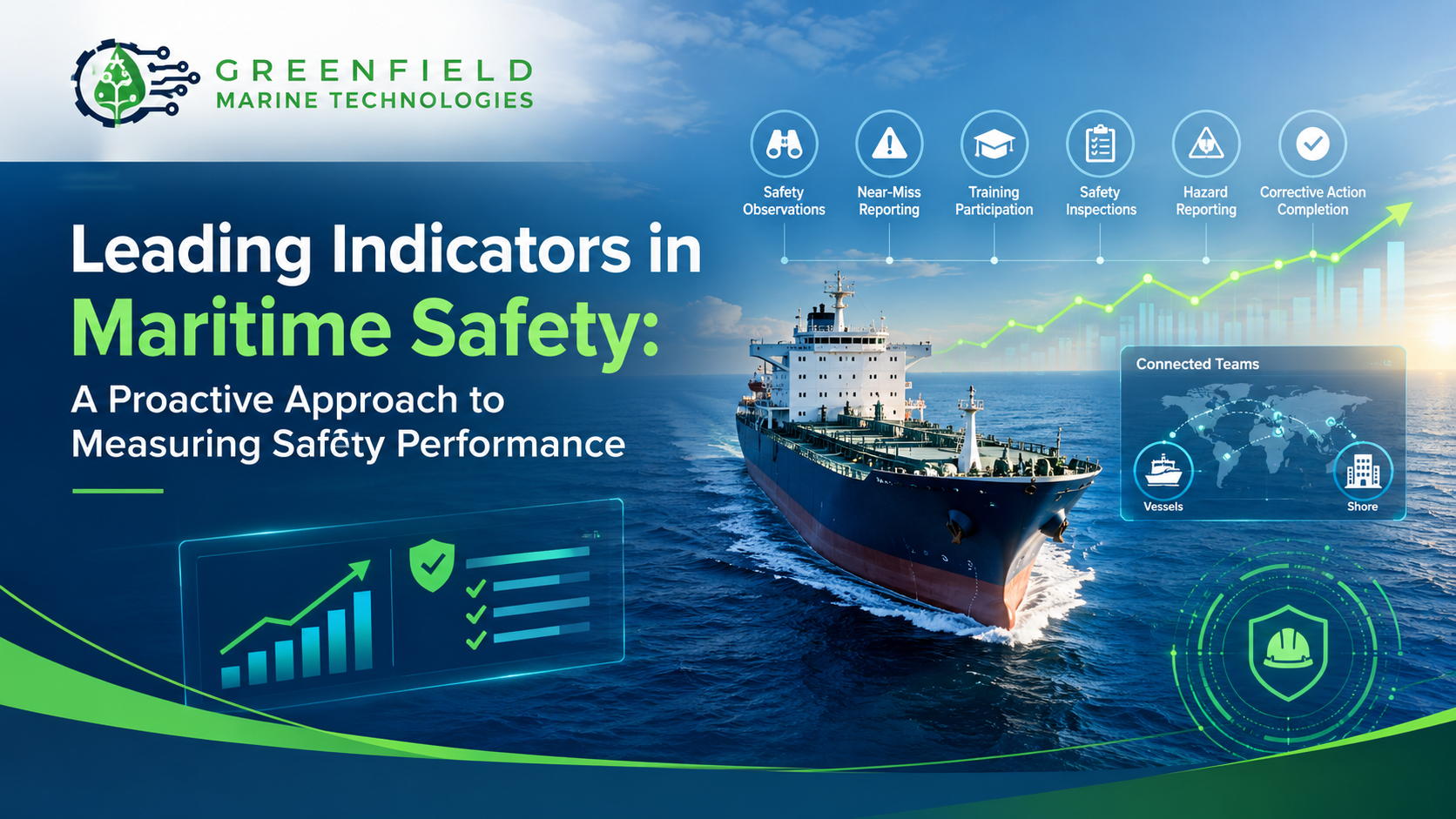
- Safety observations
- Near-miss reporting
- Training participation
- Safety inspections
- Hazard reporting
- Corrective action completion
- Risk assessments
- Safety meetings and engagement
These indicators provide a broader view of how actively safety is being managed across vessels and shore-based operations.
Leading vs. Lagging Indicators
The difference can be explained simply. Lagging indicators measure outcomes — incidents, injuries, accidents and other events that have already occurred. Leading indicators measure activities and conditions that can influence future outcomes.
Both are important. Lagging indicators help organisations understand the results of their safety performance. Leading indicators help them understand what is happening within the safety management process. Together, they provide a more complete picture of maritime safety performance.
Near Misses as Opportunities to Learn
Near-miss reporting is one of the most valuable sources of proactive safety information. A near miss provides an opportunity to learn from an event before it results in a more serious consequence.
When near-miss reports are consistently captured and reviewed, organisations can identify recurring themes and areas that may require attention. For example, patterns may appear around particular tasks, equipment, working conditions or procedures.
The value is not simply in increasing the number of reports. It is in learning from what those reports reveal. A well-managed near-miss reporting culture can therefore help turn individual experiences onboard into knowledge that can be shared across the wider organisation.
Safety Engagement Is an Important Signal
Safety performance is also closely connected to participation. When crew members actively report hazards, participate in training, contribute observations and engage with safety activities, they create a stronger flow of information between vessels and shore teams.
This makes safety engagement itself an important indicator. Strong participation can provide organisations with greater visibility into the operational environment and create more opportunities for early intervention and learning. It can also help safety teams understand where additional communication, training or support may be valuable.
Measuring More Than Training Completion
Training is another important leading indicator, but completion alone does not tell the whole story. Organisations can gain greater insight by looking at participation, assessment results, recurring training topics and whether learning is reflected in operational behaviour.
This changes the question from “Was the training completed?” to “What did the organisation learn from the training, and is that learning making a difference?”
This creates a stronger connection between learning and safety performance. Training data, when viewed alongside other safety indicators, can help organisations understand whether their safety initiatives are reaching the people and areas where they can create the greatest value.
Turning Safety Data Into Action
Leading indicators become more powerful when they are analysed together. For example, an increase in safety observations may indicate more reported hazards — but it may also indicate stronger crew engagement and a more active reporting culture.
Similarly, fewer reports do not automatically mean fewer hazards. Context matters. This is why organisations should focus on trends and relationships rather than individual numbers in isolation.
A single KPI rarely tells the complete story. Looking at multiple indicators together can provide a clearer understanding of safety performance and help teams identify areas for improvement. The goal is not to chase a specific number. The goal is to understand what safety information is telling us and use that understanding to support better decisions.
Building a More Proactive Safety Culture
A mature safety culture does not wait for incidents to provide lessons. It continuously looks for opportunities to identify risks, learn from experience and improve operational practices.
Leading indicators support this approach by giving safety teams earlier visibility into the activities and behaviours that influence safety performance. When this information is consistently captured, understood and connected to action, safety measurement becomes more than compliance. It becomes a tool for continuous learning and improvement.
At Greenfield Marine Technologies, we believe maritime technology can play an important role in helping organisations turn safety information into meaningful operational insight. Connecting safety data, crew engagement and operational intelligence can give maritime teams a clearer understanding of their safety performance and support more informed decisions.
The future of maritime safety is not only about measuring what went wrong. It is about using the information available today to learn, improve and create safer operations for tomorrow.