AI in Maritime: From Fleet Data to Decision Intelligence
The maritime industry has never lacked data. The challenge is turning noon reports, fuel, defects, inspections and crew operations into useful intelligence that supports safer, smarter fleet decisions.
The maritime industry has never lacked data.
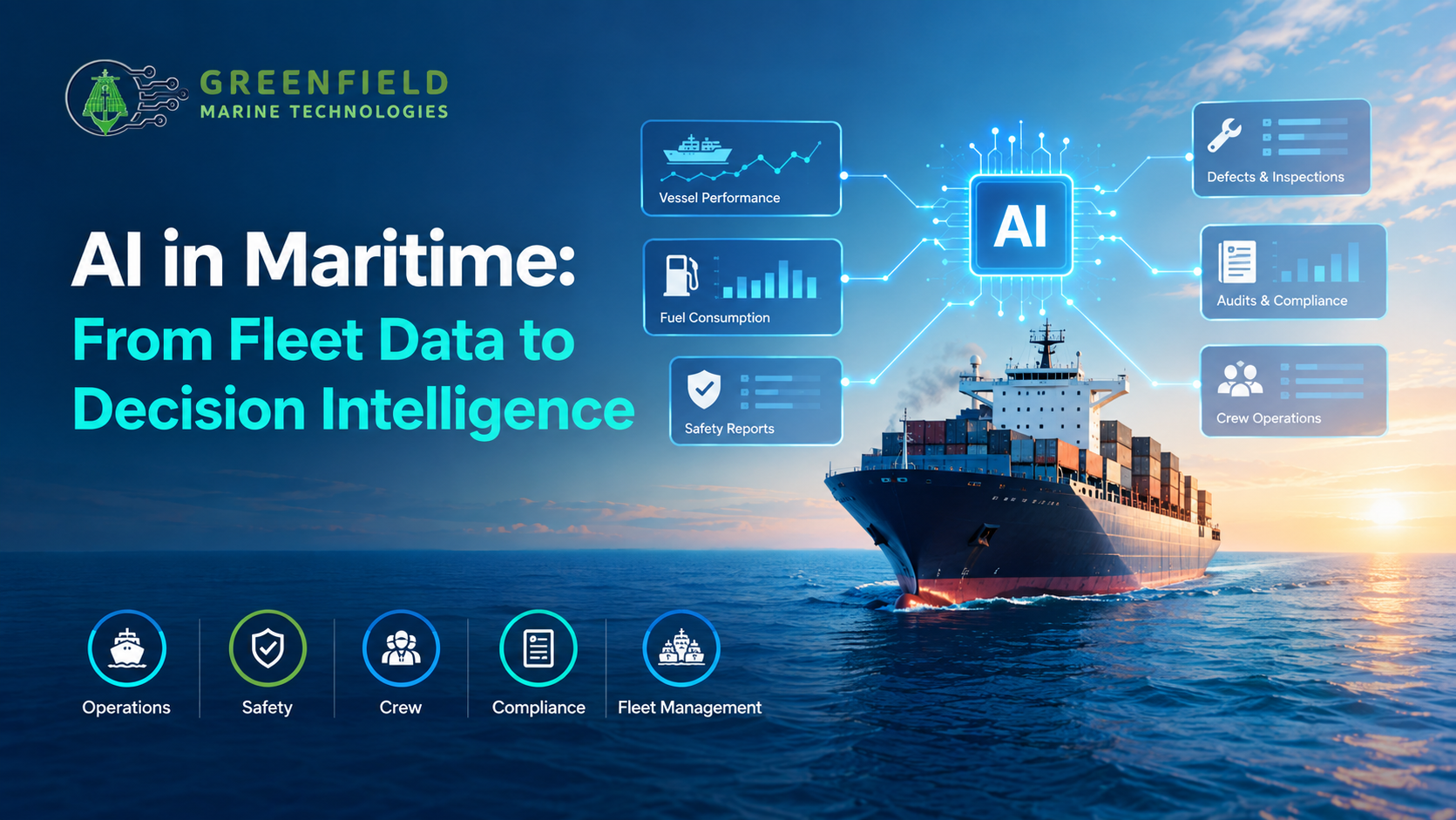
Every vessel generates information through noon reports, fuel consumption, voyage activity, defects, inspections, safety reports, audits and crew operations. Across a fleet, this creates an enormous amount of information.
The challenge is no longer simply collecting data. It is turning that data into useful intelligence.
This is where AI in maritime is creating new opportunities for shipowners and operators.
From Maritime Data to Intelligence
Traditional fleet management often requires teams to manually review reports, compare vessel performance and identify recurring issues.
AI can help analyse large volumes of information and identify patterns that may be difficult to see manually. These can include:
- Changes in vessel performance
- Recurring defects or operational issues
- Fuel and voyage patterns
- Repeated safety observations
- Audit and inspection trends
- Areas requiring additional crew attention
Instead of looking at individual data points, AI can help provide a broader view across the fleet.
Moving From Reactive to Proactive Decisions
Historically, maritime teams have often focused on understanding what happened. AI can help organizations explore additional questions:
- What is changing?
- What patterns are repeating?
- Where should we focus our attention?
For example, a single defect or safety observation may not appear significant. But when similar information appears repeatedly across vessels, it may indicate a broader trend.
AI can help surface these patterns earlier, giving maritime professionals more context for their decisions.
AI Across the Maritime Industry
The potential applications of AI extend well beyond one area of shipping. AI can support:
- Vessel operations — analysing operational and voyage data
- Safety — identifying recurring risks and trends
- Crew development — turning operational experiences into relevant learning
- Compliance — helping teams organize and analyse audit and inspection information
- Fleet management — connecting information across vessels to provide a broader operational picture
The common objective is simple: turn complex maritime data into actionable intelligence.
The Human Element Still Matters
AI does not replace the experience of masters, crew, superintendents, engineers or fleet managers. Instead, it can provide them with another layer of intelligence.
The future of maritime AI is therefore not about people versus technology. It is about combining human expertise, maritime data and AI to support better-informed decisions.
Human Expertise + Maritime Data + AI
The Future of AI in Maritime
The next stage of maritime digitalisation will not simply be about collecting more information. It will be about understanding existing information better.
As AI continues to evolve, maritime organizations can move from data to analysis, insight and decision — toward a more connected and intelligent approach to fleet management.
At Greenfield Marine Technologies, we believe the future of maritime technology lies in using AI to make complex fleet information easier to understand, helping organizations operate smarter, safer and more efficiently.
The value of maritime data is not how much you collect. It is what you can understand and act upon.