How AI Is Transforming Noon Reports in Shipping
Every day, thousands of ships send a noon report ashore. Artificial intelligence is turning those same daily reports into one of the richest sources of insight a fleet has.
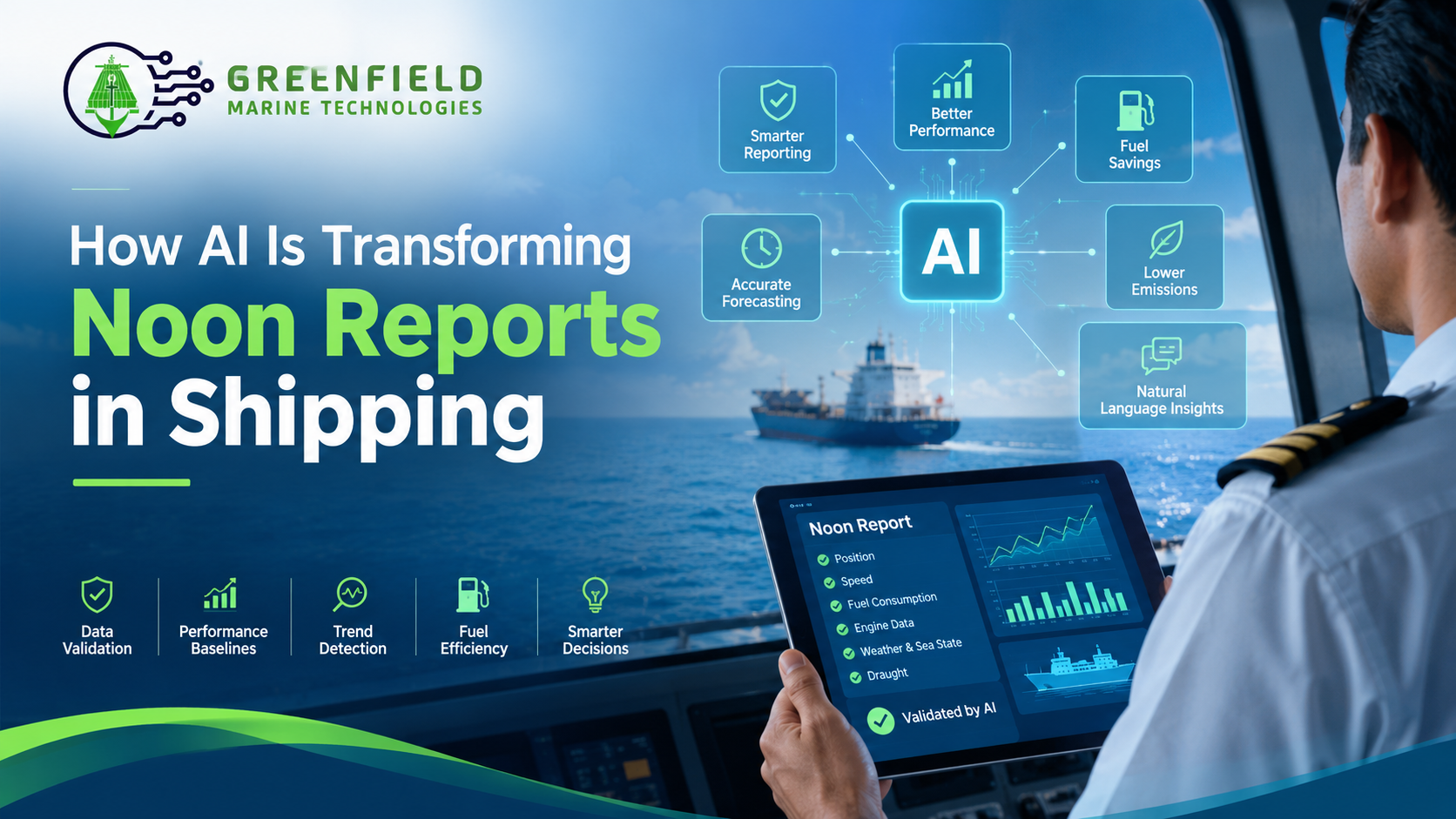
Every day, thousands of ships send a noon report ashore. For decades, these reports were read, filed and used mainly for the day’s operational decisions.
Artificial intelligence is changing that. The same daily reports are now becoming one of the richest sources of insight a fleet has. This article explains why noon reports suit AI so well, the six ways AI is putting them to work, and how fleets can get started.
Why noon reports are ideal for AI
AI learns from data, and noon reports offer exactly the kind of data it needs:
- Daily and consistent: a new data point from every vessel, every day at sea
- Rich in detail: position, speed, distance, fuel consumption, engine data, weather, sea state and draught in one place
- Long history: years of reports give AI a clear view of how each vessel normally performs
- Fleet-wide: every ship reports in a similar format, so vessels can be compared side by side
Once reports are captured digitally in a structured format, this daily routine becomes a powerful foundation for machine learning.
1. AI-assisted reporting on board
AI starts adding value before the report even leaves the ship.
- Smart validation: AI compares each new entry with the vessel’s own history and flags values that look unusual, such as a sudden jump in fuel consumption.
- Automatic consistency checks: distance, speed and time are checked against each other, so calculation slips are caught on the spot.
- Pre-filled fields: details that rarely change can be carried forward from the previous report, so officers can focus on what is new.
The result is cleaner data from the start, and a faster, simpler routine for busy officers.
2. Learning each vessel’s normal performance
Every ship has its own character. Machine learning models study a vessel’s noon report history to learn how its speed and fuel consumption normally behave.
Crucially, these models take conditions into account. Wind, waves, current and draught all affect performance, so AI separates the effect of the weather from the performance of the ship itself. This gives managers a fair, like-for-like view of how each vessel is really performing.
3. Spotting change early
Once AI knows what “normal” looks like, it can highlight gradual changes that are hard to see in daily figures.
A slow rise in consumption at the same speed and conditions can point to hull fouling or a change in engine condition. AI brings these trends to the attention of technical teams early, helping them plan cleaning or maintenance at the most effective moment.
4. Finding fuel savings
With daily data from across the fleet, AI can identify the operating patterns linked to the lowest fuel use:
- The most efficient speed ranges for each vessel
- Trim and draught settings that reduce consumption
- Voyage and routing patterns that perform best in different conditions
Insights from one vessel can then be shared with sister ships, spreading good practice across the fleet.
5. Forecasting with confidence
Noon report data also helps AI look ahead:
- Arrival times: more accurate ETAs based on each vessel’s real performance
- Fuel needs: forecasts of consumption that support better bunker planning
- Carbon intensity: a running projection of each vessel’s annual carbon intensity, giving managers time to plan
Forecasts like these turn the noon report from a record of yesterday into a guide for tomorrow.
6. Generative AI: conversations with fleet data
Generative AI makes noon report data accessible to everyone, without spreadsheets or specialist tools. Managers can simply ask questions in everyday language:
- “Which vessels used the most fuel per mile this month?”
- “How has this ship’s consumption changed since its last dry dock?”
- “Summarise yesterday’s reports for the whole fleet.”
Generative AI can also draft daily fleet summaries and prepare first versions of performance reports for the team to review.
Getting started with AI for noon reports
- Go digital. Capture noon reports in a structured digital form, ideally one that works offline at sea and syncs when connected.
- Standardise definitions. Use the same fields and meanings on every vessel so data can be compared.
- Build the history. The more consistent data AI has, the better it learns each vessel.
- Start with one use case. Smart validation or performance baselines are a natural first step.
- Keep people in the loop. Let officers and superintendents review AI insights and add their operational knowledge.
- Share results with the crew. When officers see their data driving real improvements, engagement grows.
People and AI together
AI brings speed, scale and pattern recognition across thousands of reports. Seafarers and shore teams bring context, judgement and experience. Together, they turn a simple daily report into smarter decisions, more efficient voyages and a more sustainable fleet.
Frequently asked questions
How is AI used with noon reports? AI checks entries for unusual values, learns each vessel’s normal performance, highlights gradual changes, identifies fuel-saving patterns, supports forecasting and lets managers ask questions about fleet data in plain language.
Can AI account for weather in vessel performance? Yes. Machine learning models can use the weather, sea state and draught recorded in noon reports to separate the effect of conditions from the vessel’s own performance.
What is needed to use AI with noon reports? Structured digital reports, consistent definitions across the fleet and a history of data for AI to learn from.
What is generative AI used for in ship performance? Generative AI lets managers ask questions about fleet data in everyday language, summarise daily reports and draft performance reports for review.