The Importance of Big Data in the Maritime Industry
Fleets already generate more data than they can read. The advantage now belongs to operators who can turn that volume into a decision before the voyage ends.
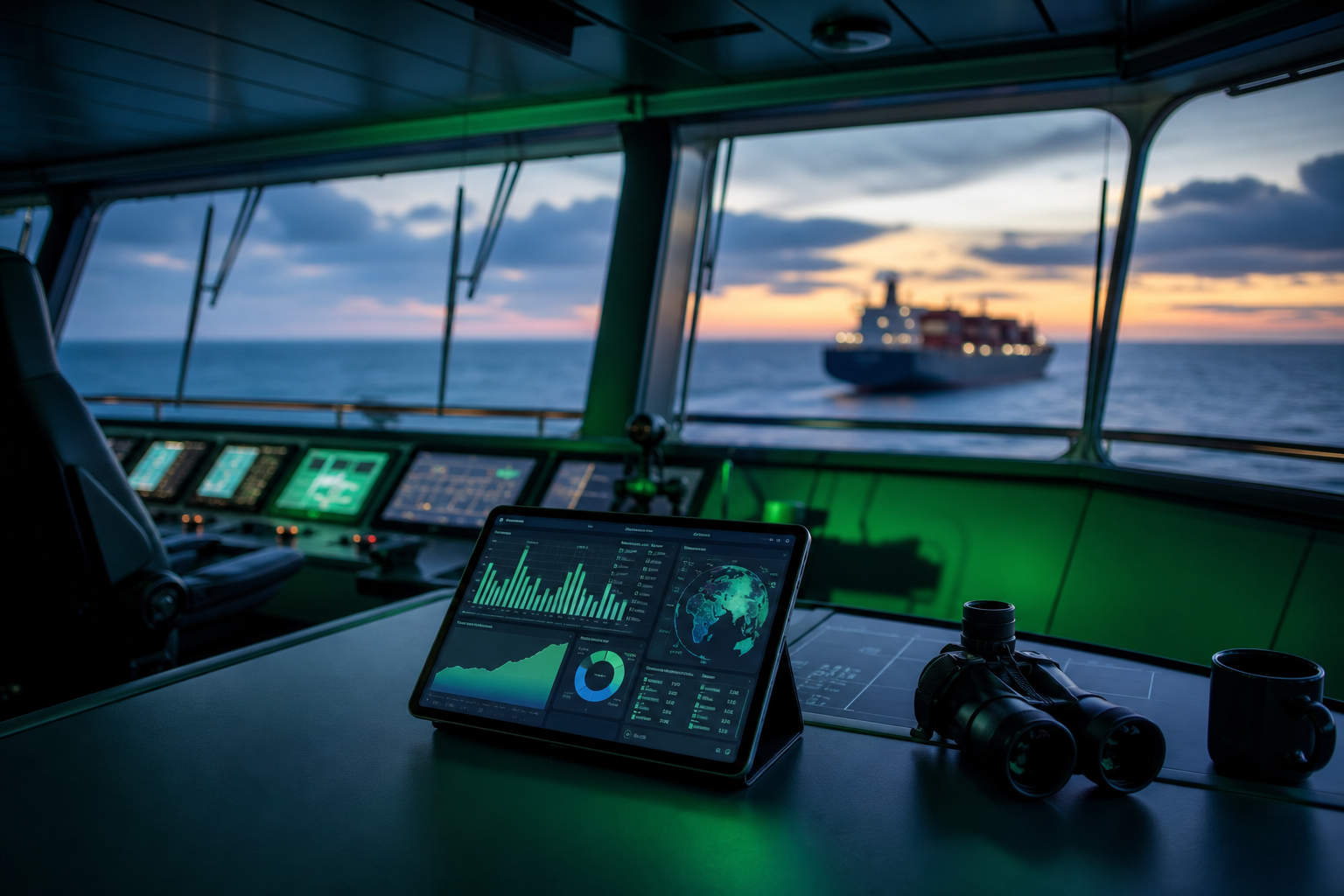
A modern vessel produces more operational data in a single voyage than an entire fleet produced in a year two decades ago. Engine telemetry, noon reports, weather routing, cargo operations, crew reports, inspection records — all of it accumulating faster than anyone ashore can read it.
The industry's instinct has been to collect more. The advantage now belongs to operators who can turn what they already have into a decision before the voyage ends.
Volume was never the problem
Ask most technical managers what stops them acting on fleet data and the answer is rarely 'we don't have enough'. It is that the data arrives late, in incompatible formats, from systems that were never designed to talk to one another. A near miss reported on Tuesday reaches the superintendent's inbox on Friday, in a PDF, alongside forty others.
- Noon reports keyed by hand, then reconciled weeks later against bunker delivery notes
- Safety observations sitting in a shared mailbox with no severity, no owner and no deadline
- Inspection findings tracked in a spreadsheet that only one superintendent knows how to read
- Emissions positions rebuilt from scratch at year end, when nothing can be changed
What changes when the machine reads first
The value of AI in this context is unglamorous and enormous: it reads everything, immediately, and consistently. Free-text reports get classified by hazard type and severity. Impossible fuel figures get flagged the moment they are submitted. Findings written differently across five vessels get clustered because they share one underlying cause.
The goal is not a bigger dashboard. It is a shorter distance between something happening at sea and someone ashore being able to do something about it.
That shortening is where the return comes from. A repeat-cause pattern spotted in week three instead of month nine is an incident that never happens, an off-hire day that never occurs, and an insurance conversation that goes differently.
Start with the data you trust least
Counter-intuitively, the best place to begin is not your cleanest dataset. It is the one your team quietly distrusts — usually crew-reported data. Make that fast and frictionless to submit, verify it automatically, and the rest of your analytics stops being built on sand.